 DatingHIV.com
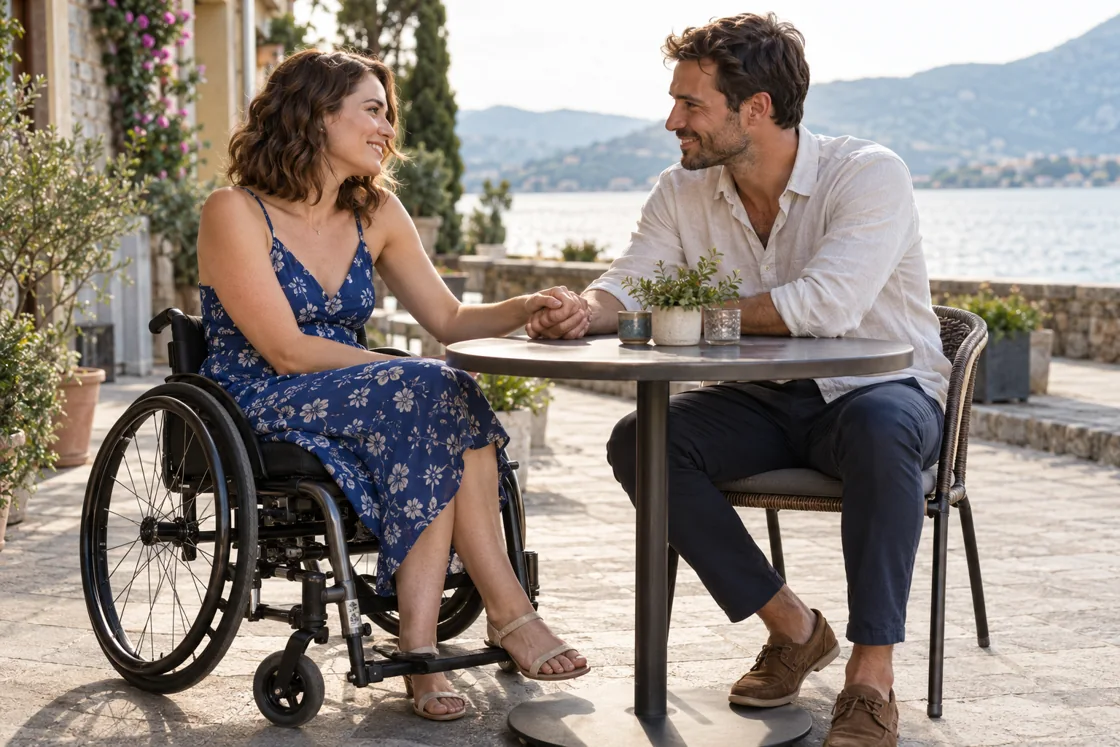
Start With Attraction and Access
You can want romance and need an accessible venue at the same time. Access is part of making the date possible, not a reason the romantic invitation should disappear. Begin with what you would enjoy doing together and the conditions that help you participate.
Disability experiences vary, including visible and nonvisible disabilities. HIV does not automatically explain every access need, and another diagnosis does not tell a partner what support you want. Ask them not to infer capability or dependence from appearance.
The HIV singles introduction offers relationship choices without allocating them by health or disability. You may want casual dates, companionship, or commitment. State the goal you want, rather than the one someone assumes would be most realistic for you.
Describe the Access You Need
Use specific requests: step-free entry, a quieter environment, seating, a shorter duration, captions, or a plan with breaks. You do not need to provide a full medical explanation for a request to be useful.
Ask a venue about the actual feature rather than relying on a broad accessible label. For example, step-free entry does not necessarily answer questions about toilets, seating, or transport. Verify the parts relevant to you before making the plan depend on them.
A partner can help with this work if you want, but should not take over without asking. You may know exactly what you need and prefer to contact the venue yourself. Support is respectful when it follows your expertise about your own life.
A Venue That Makes the Date Possible
Choose the activity and access together. A beautiful setting is not a good plan if getting there uses all your energy or leaves no workable return journey. Consider the whole trip, including waiting, weather, cost, and the time needed afterward.
A simple planning comparison can help:
| Question | Why It Matters |
|---|---|
| Can I arrive and leave independently if needed? | Preserves choice throughout the date |
| Is the relevant access feature confirmed? | Avoids relying on a vague label |
| Can we shorten or adapt the activity? | Leaves room for changing energy or conditions |
| Is the alternative genuinely enjoyable? | Keeps access connected to the dating experience |
First-meeting privacy remains relevant. An access request does not require sharing a home address or accepting transport from a person you do not yet know well.
Help Is an Offer Not a Role
Ask before physical assistance, moving equipment, speaking for someone, or making a decision on their behalf. A helpful intention does not establish what the person wants. The answer may change by situation.
You can say, “I will ask if I need help,” or “Could you do this specific part?” A partner should not interpret either request as permission to supervise everything. Likewise, you can appreciate help without owing affection or a continued relationship.
Mutual support keeps both people's contributions visible. A person with a disability and HIV may be the one offering emotional, practical, or financial support in many situations. Equal partnership does not require identical tasks; it requires respect and a voice in how needs are met.
Discuss assistance in the setting where it matters. A welcome hand on an uneven path does not establish permission to move equipment, speak for you, or make the next decision. Keeping the request specific can make help easier to accept comfortably.
Health Information Has Different Layers
A date may need to know how to make an outing accessible without knowing a diagnosis. HIV information, other health details, medication, and personal history can each have different relevance. Choose what to discuss for the decision at hand.
For HIV-related clinical facts, use reliable information such as the U=U explanation, and take individual questions to qualified professionals. Do not let a partner assume that they understand every condition because they know one label.
Medical privacy helps separate honesty from unrestricted record access. A relationship should allow you to explain a need without repeatedly proving its legitimacy through documents or accepting that health information becomes public once a partner knows it.
Look Beyond the First Accessible Date
Compatibility includes how someone handles adaptation over time. Do they ask, listen, and revise a plan without resentment? Can they enjoy a different activity rather than treating it as a lesser version of the date they wanted?
You also get to assess attraction and ordinary fit. A person arranging access well does not obligate you to feel romantic chemistry. Respect is a baseline, not a favor that must be repaid through a relationship.
Keep interests and independence alive as the connection grows. Balancing closeness and autonomy can help when support becomes more regular. The aim is a partnership that makes shared life more enjoyable while recognizing both people as adults with their own choices and strengths.
Must I explain a nonvisible disability to request an adjustment?
You can describe the practical need without giving a full history. Some providers may have formal processes for particular services, but a date does not automatically need your records.
Is an accessible first date enough to establish compatibility?
No. It is one positive part of the experience. Attraction, goals, communication, and consistent respect still need time to develop.
Meet HIV Singles With Shared Interests
Meet HIV Singles With Shared InterestsChoose the connection that fits your life, and let a conversation be the beginning.